The best quiet cat water fountain is one you rarely notice once it is running. Most cats are drawn to moving water, and a fountain can encourage a low-thirst pet to drink more, but a noisy pump or a loud free-fall stream can defeat the purpose for both of you. Quiet operation comes down to a few specific design choices — the type of pump, the material of the reservoir, and how the water falls — rather than a vague “whisper-quiet” label on the box. This guide explains what to check so you can compare models on real criteria instead of marketing language.
What “quiet” actually means in a cat water fountain
Noise in a fountain comes from two sources: the motor inside the pump and the sound of water hitting the surface. A submersible pump rated around 20–30 decibels is generally inaudible in a typical room, because ambient household noise usually sits around 30–40 dB. Below 25 dB, a pump tends to disappear into background sound.
Several details raise the noise floor in practice:
- Free-fall streams splash and bubble more than a gentle faucet or bubbling-center flow.
- Plastic reservoirs can vibrate and amplify pump hum more than dense ceramic or stainless steel.
- A low water level makes the pump work harder and sound louder, which is why top-off habits matter.
- A dirty pump or clogged filter changes flow and adds a whirring or gurgling sound over time.
The takeaway: a fountain is only as quiet as its cleanest, fullest state. If you want near-silent operation, look for a submersible pump rated under 30 dB, a dense reservoir material, and a gentle flow design. Our comparison reviews explain how to weigh these points model by model.
Why cats prefer running water — and why quiet matters
Cats evolved as desert-adapted hunters with a naturally low thirst drive. Many are attracted to running water because moving, fresh water signals safety in the wild, whereas still water can harbour bacteria. Flowing water also encourages more frequent drinking, which supports kidney and urinary health — a real benefit for cats prone to dehydration.
That instinct is exactly why a quiet fountain helps. A timid or noise-sensitive cat may avoid a loud fountain, undoing the whole point. A near-silent pump means the water is there when the cat wants it, without the motor hum becoming a source of stress. If your cat already avoids still bowls, a fountain is worth trying — but choose one whose sound level your cat can tolerate.
What makes one fountain quieter than another
Pump type
Submersible pumps sit inside the reservoir and are generally quieter than free-standing or ultrasonic designs. Wireless (cordless) pumps remove the cable but the quiet depends on the same motor and housing quality. Compare measured decibel ratings when they are published, and prefer pumps rated below 30 dB.
Reservoir material
Material affects both sound and hygiene. Dense ceramic and stainless steel dampen vibration and resist bacterial buildup, while plastic is lightweight and inexpensive but can scratch, harbor bacteria, and sometimes amplify hum. If quiet matters most, ceramic and stainless steel tend to perform best, though they cost more and weigh more.
Flow design
A bubbling-center stream or a low faucet-style flow makes far less splash than a high free-fall cascade. For a quiet home, favor gentle, low streams over dramatic falls.
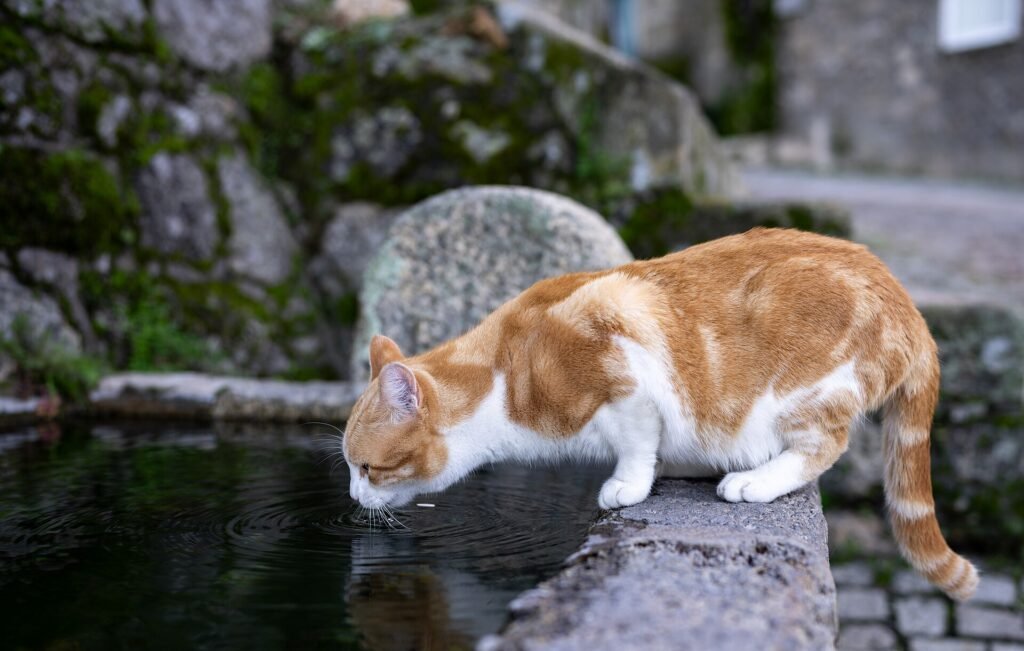
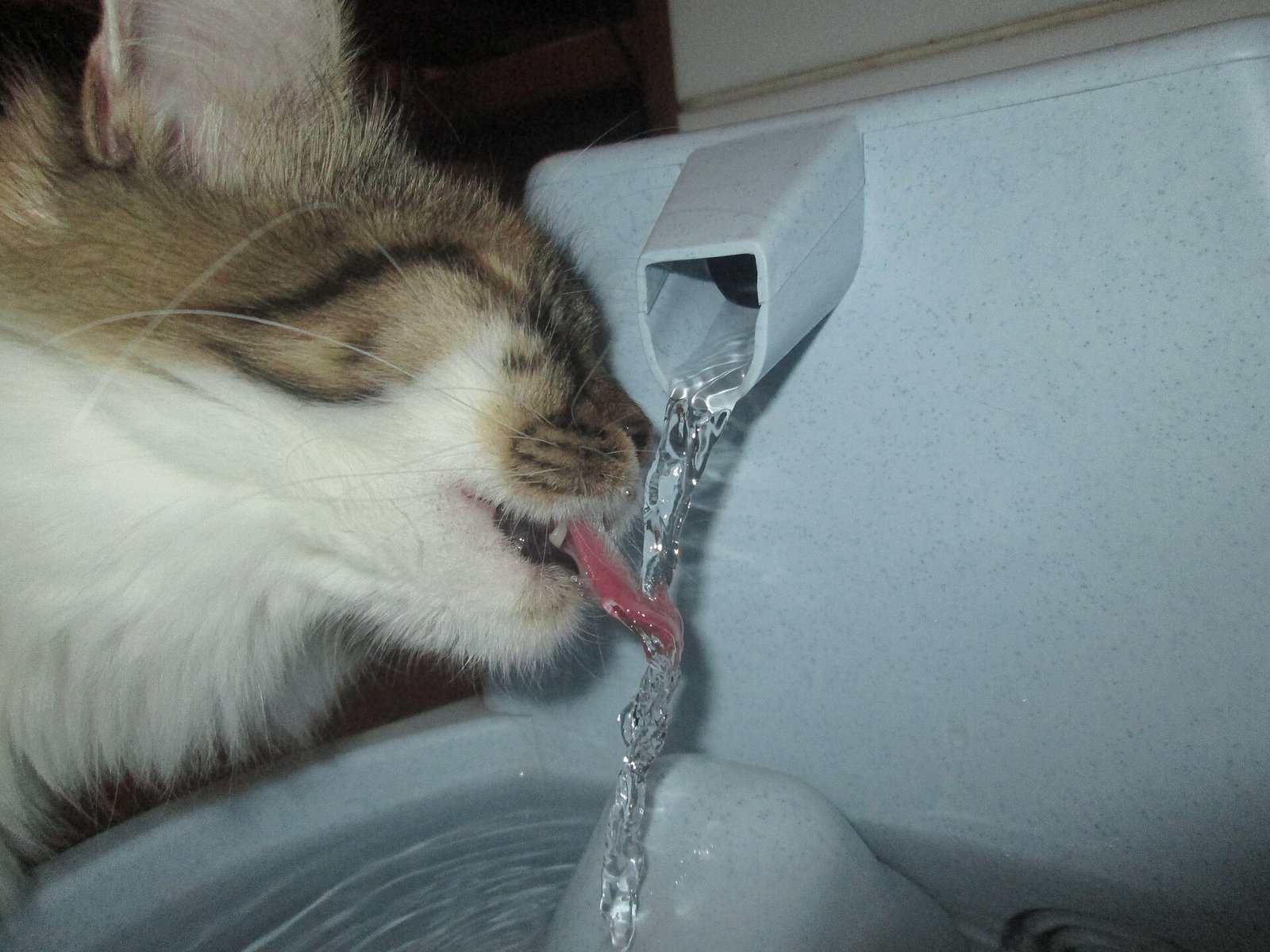
Featured image: Photo by User:Charvex · PUBLIC DOMAIN
Key features to compare before you choose
Beyond noise, a few practical features decide whether a fountain fits your household. Our buying guide walks through these in depth.
- Capacity: Larger reservoirs (2–3.5 L) need fewer refills and suit multi-cat homes, but take up more space.
- Filter system: Multi-stage filters with carbon remove odor and improve taste, but every filter must be replaced on schedule.
- Ease of cleaning: Dishwasher-safe parts and smooth interiors make weekly cleaning realistic; fiddly crevices get ignored.
- Number of cats: Multiple drinkers need more capacity and possibly multiple drinking zones.
- Power and cordless options: Cordless fountains suit rooms without outlets but need regular charging or battery attention.
Stainless steel is a strong starting point for durability and hygiene, while ceramic is the quiet-friendly choice for many homes. If you have picky or anxious cats, you may want to review guidance for indoor cats before committing.
Maintenance keeps a quiet fountain quiet
Regular upkeep is the single biggest factor in how a fountain sounds six weeks after you buy it. A dirty pump and a low water level are the most common causes of a suddenly noisy fountain.
- Top off daily and run a weekly rinse to prevent pump strain and film buildup.
- Clean the pump and basin weekly with warm, soapy water; avoid harsh chemicals.
- Replace the filter every 30 days — or sooner with multiple cats — and rinse a new filter before use.
- Watch the flow: a weaker or louder stream usually signals a clogged pump or a filter that is due.
If noise returns after cleaning, check that the pump sits level and is fully submerged. Most persistent noise problems are pump maintenance issues, not design flaws.
Frequently asked questions
What decibel level is quiet for a cat water fountain?
Pumps rated below 30 dB are generally quiet enough for bedrooms and living spaces, since typical ambient noise sits around 30–40 dB. Below 25 dB, a pump is effectively inaudible in most rooms.
Is stainless steel or ceramic quieter?
Both dense materials dampen vibration better than plastic. Ceramic is often cited as the quiet-friendly option, while stainless steel offers durability and easier cleaning. Your specific pump and flow design matter more than material alone.
Why did my cat water fountain get louder?
The most common causes are a low water level, a dirty pump, or a clogged filter. Top off the water, clean the pump, and replace the filter on schedule before assuming the fountain is failing.
Are cordless cat water fountains quieter?
Not automatically. Cordless simply removes the cable; the motor and housing still determine sound. Check measured decibel ratings rather than assuming cordless equals quiet.
The bottom line
The best quiet cat water fountain combines a submersible pump rated below 30 dB, a dense reservoir material such as ceramic or stainless steel, and a gentle flow design — then stays quiet because you maintain it. Start by deciding how many cats you serve and how much you are willing to clean, and use measured noise ratings over marketing terms. Once you have shortlisted a few models, our comparison reviews help you compare them fairly before making a decision.
We keep this site free by using affiliate links, and we are transparent about how we compare products so you can trust what you read.
Sources and further reading
The information in this guide reflects general, publicly available guidance on cat hydration, pump noise, and fountain maintenance. Useful references include the Catit explanation of why cats love running water, Petcube’s maintenance and material guides, and the Environmental Literacy Council’s material comparison. Product claims, prices, and availability change frequently, so always verify current details on the retailer’s listing before purchase.