Best Cat Water Fountain for Multiple Cats: A Practical Buying Guide
Finding the best cat water fountain for multiple cats is not about picking the largest or most expensive model on the shelf. It is about choosing a fountain that matches how much water your household actually drinks, gives every cat a comfortable place to drink, and stays clean enough to remain a real health benefit instead of a chore. Get those four things right, and the fountain does more for your cats than any single feature, price point, or brand name.
This guide explains what to evaluate before you buy, how to size a fountain for two, three, or more cats, and how placement and maintenance decide whether the fountain actually gets used. If you want the full decision process from the start, our practical buying guide to cat water fountains walks through the basics first.
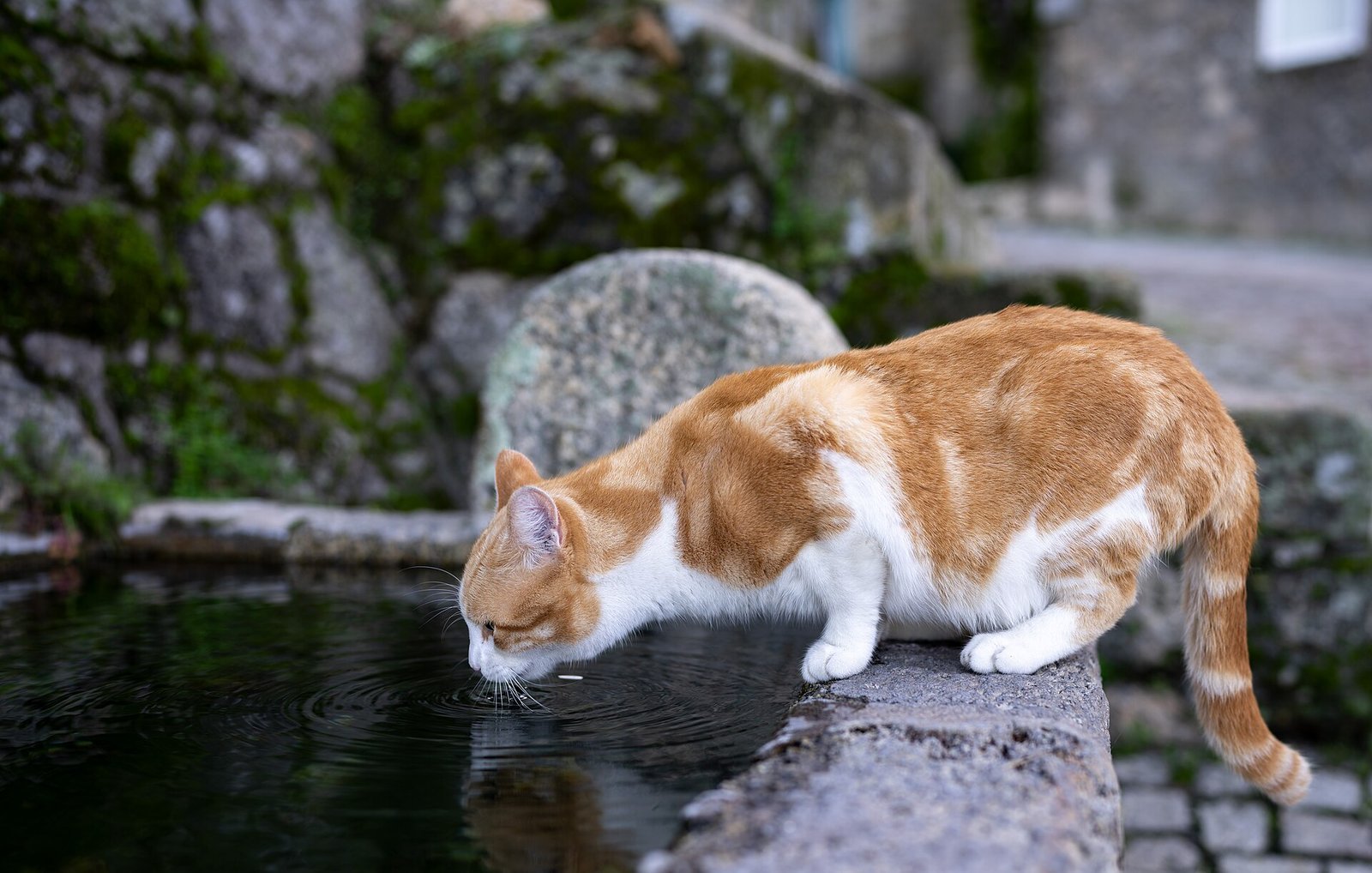
Featured image: Photo by Jules Verne Times Two · CC BY-SA 4.0
What actually makes a fountain work in a multi-cat home
Before comparing models, it helps to name the real job. In a household with several cats, a fountain must do four things at once:
- Hold enough water that nobody runs dry between your normal refill routine.
- Offer more than one drinking point so a shy cat is not blocked by a confident one.
- Stay hygienic with materials and a filter system that handle hair, dust, and food debris from multiple cats.
- Run quietly enough that cautious cats are not scared away from the water.
Any fountain that fails one of these four conditions will likely be ignored by at least one cat, no matter how well it is rated elsewhere. That is why this guide looks at each condition separately instead of offering a single “winner.”
How much water do multiple cats actually need?
Capacity is the first thing to size correctly, and the math starts with your cats, not with the fountain. The Cornell Feline Health Center estimates that cats need about 4 ounces of water per 5 pounds of lean body weight each day, which means an average 10-pound cat needs roughly one cup of water daily. Cats eating wet food, which can be up to 80% water, typically drink less from a bowl; cats on dry food take in most of their daily requirement by drinking.
Put that into a household example. Three 10-pound cats eating mostly dry food need about three cups (roughly 24 ounces) of drinking water per day, plus evaporation. A 2-liter fountain (about 67 ounces) would cover barely two days before needing a refill. A 3.5-liter fountain (about 118 ounces) gives you a comfortable four- to five-day buffer.
As a general sizing rule used across retailers and veterinary resources:
- 1.5 to 2 liters: suits a single cat.
- 2.5 to 3 liters: a reasonable fit for two cats.
- 3.5 liters and above: recommended for three or more cats or for owners who travel and want a longer refill interval.
If your cats are large breeds, very active, or on an all-dry diet, err on the larger side. A bigger reservoir simply buys more time between refills and reduces the risk of a dry-run pump, which is a common cause of premature fountain failure.
What to look for in the best cat water fountain for multiple cats
Once capacity is settled, compare models on the features that directly affect multi-cat households. These are the criteria that matter most and where most buying mistakes happen.
Drinking points and layout
Cats differ in how they like to drink: some prefer a gentle stream, others a bubbling top, and many prefer a wide, shallow pool that does not wet their whiskers. Fountains with multiple streams or a 360-degree open drinking surface give more cats access at the same time and cater to different preferences. In a multi-cat home, a single narrow spout is often a bottleneck.
Material: stainless steel, ceramic, or plastic
Material affects hygiene, durability, and even skin health. Stainless steel and glazed ceramic are non-porous and far easier to keep clean. Plastic, especially once it becomes scratched with age, can hold bacteria in micro-crevices; veterinarians and manufacturers such as Catit note that worn plastic dishes and fountains are sometimes linked to feline chin acne, and a stainless-steel surface is commonly recommended as the safer alternative. For a fountain that several cats use daily, stainless steel is a strong default because it is dishwasher-safe and does not absorb odors.
Filtration: hair, carbon, and upkeep
Multi-cat households generate more hair, dust, and food debris, so the filter system does heavier work. Most fountains use a two- or three-stage setup: a foam or sponge pre-filter catches hair and larger particles, while an activated carbon layer reduces odors and improves taste. Some add ion-exchange resin to soften water. Whatever the system, check how easy it is to buy replacements and how often they need changing; a filter you cannot easily source will be a filter that never gets replaced.
Pump noise
A loud pump can make a cautious cat avoid the fountain entirely. Look for fountains described as quiet pumps, and pay attention to where the fountain will sit; a unit in a bedroom or hallway is judged differently than one in a busy kitchen. Many manufacturers rate pumps around or below 30 dB at close range, which is roughly a whisper, though real-world noise depends on water level and buildup inside the pump. For a deeper look at the quietest styles, see our guide to quiet cat water fountains.
Cleaning and maintenance
The best fountain in the world is useless if it is too complicated to clean, because a neglected fountain becomes a bacteria risk. Prefer models with few parts, smooth surfaces, and dishwasher-safe components. Fountains with a visible water-level window help you spot low water before the pump runs dry. If you have more than one cat, expect to clean more often, so design simplicity is not a nice-to-have; it is the feature that keeps the fountain running.
Corded or cordless
Traditional corded fountains are reliable and never need charging, but they restrict placement to spots near an outlet. Cordless or rechargeable fountains can sit anywhere, which helps you spread water stations across the house. Our guide to automatic cat water fountains covers how these systems work and what to verify before buying.
A quick comparison checklist for multi-cat fountains
Use this table to compare models side by side before you buy. It lists what to check and why each point matters when several cats share one fountain.
| What to check | Why it matters in a multi-cat home | What to look for |
|---|---|---|
| Capacity | More cats drink more; small reservoirs run dry fast | About 3 L (100 oz) for two cats; 3.5 L+ for three or more |
| Drinking points | Cats have different preferences and some avoid crowded spots | Multiple streams, wide shallow pool, or 360-degree access |
| Material | Scratched plastic can harbor bacteria and is linked to feline acne | 304 stainless steel or glazed ceramic |
| Filtration | Hair and debris accumulate faster with more cats | Foam/sponge pre-filter plus activated carbon; easy replacements |
| Pump noise | A loud pump can scare cautious cats away | Quiet pump; check where the unit will actually sit |
| Cleaning | Multi-cat fountains need frequent full cleans | Few parts, dishwasher-safe surfaces, accessible pump |
For a broader method of comparing any two models on these criteria, read our guide to comparing cat water fountain reviews.
Placement matters as much as the fountain: the “plus one” rule
Even the best cat water fountain for multiple cats cannot solve the problem that territorial conflict causes. The Cornell Feline Health Center lists conflicts among cats in a household as a direct reason a cat may not drink enough, because a dominant cat can effectively “ban” another from the bowl.
That is why veterinary resources widely recommend the plus-one rule for shared resources: provide one of each resource per cat, plus one extra, placed in different locations. If you have three cats, that means at least four water stations spread across the home, not one fountain in the kitchen. Practical placement tips:
- Put water well away from food bowls and litter boxes; many cats dislike drinking next to eating areas.
- Place stations in different rooms or on different floors so a shy cat always has a quiet option.
- Keep the fountain in a visible, low-traffic spot where cats feel safe approaching.
- Pair the fountain with a simple backup bowl so water is never unavailable during cleaning cycles.
If your cats are indoor-only, see our notes on choosing a fountain for indoor cats for placement and size considerations specific to indoor households.

A realistic maintenance schedule for a multi-cat fountain
A fountain in a multi-cat home needs more attention than one used by a single cat. Plan around this baseline schedule, and adjust if you notice odor, slime, or floating debris:
- Change the water every 2 to 3 days in multi-cat households; a single-cat fountain can often go 3 to 5 days between changes.
- Fully clean the fountain at least once a week, taking apart the bowl, reservoir, and pump as the manual directs.
- Replace the filter every 2 to 4 weeks (or sooner if the water stays cloudy), following the specific product’s schedule.
- Deep-clean the pump monthly, since hair and mineral buildup inside the pump is the most common cause of reduced flow or failure.
When cleaning, use warm water and a mild, unscented dish soap, rinse every part thoroughly, and never use harsh chemicals that leave residue. If the fountain has a cord, keep the electrical parts dry and follow the manufacturer’s cleaning instructions exactly.
Frequently asked questions
Is a water fountain better than bowls for multiple cats?
A fountain can encourage some cats to drink more because moving water seems fresher to them, but research shows individual preferences vary. A small pilot study in the Journal of Veterinary Behavior found strong individual preferences for either still or flowing water without proving a group preference. For multi-cat homes, use the plus-one rule: a fountain can be the main station, but keep backup bowls in other locations so every cat always has access.
How many water fountains do I need for multiple cats?
Follow the plus-one rule for water stations in general: one per cat plus one extra. You do not need a fountain at every station, but a single fountain in one room is rarely enough for three or more cats. One large fountain plus one or two quiet bowls spread around the home is a practical setup.
Do cats actually prefer running water?
Some do, and some do not. In the wild, moving water is usually fresher and safer than stagnant water, which may explain why many cats are drawn to taps and streams. But the same pilot study found that individual cats had strong, different preferences, so watch your own cats and match the water source to what they actually use.
How often should I change the water in a multi-cat fountain?
Every 2 to 3 days is the common recommendation for multi-cat households, with a full cleaning of all parts at least weekly and a filter change every 2 to 4 weeks. Fountains with continuous filtration still need this routine because circulating water cannot remove all bacteria and debris.
Sources
The following sources were used for the hydration, material, and maintenance guidance in this article. Prices, availability, and product specifications change frequently, so always verify current details before purchase.
- Cornell Feline Health Center, Hydration — daily water intake estimates and hydration risks: vet.cornell.edu
- Catster, How Often Should You Change the Water in a Cat Water Fountain? — multi-cat water change and cleaning schedules: catster.com
- Catit, What is feline acne and how to prevent it? — plastic versus stainless steel surfaces: catit.com
- Pachel & Neilson, Comparison of feline water consumption between still and flowing water sources: A pilot study, Journal of Veterinary Behavior (2010): sciencedirect.com
Product links on this site may be sponsored, and we may earn a commission from qualifying purchases. Our affiliate disclosure and editorial policy explain how we keep product guidance independent. For the complete set of buying guides, visit the blog index.